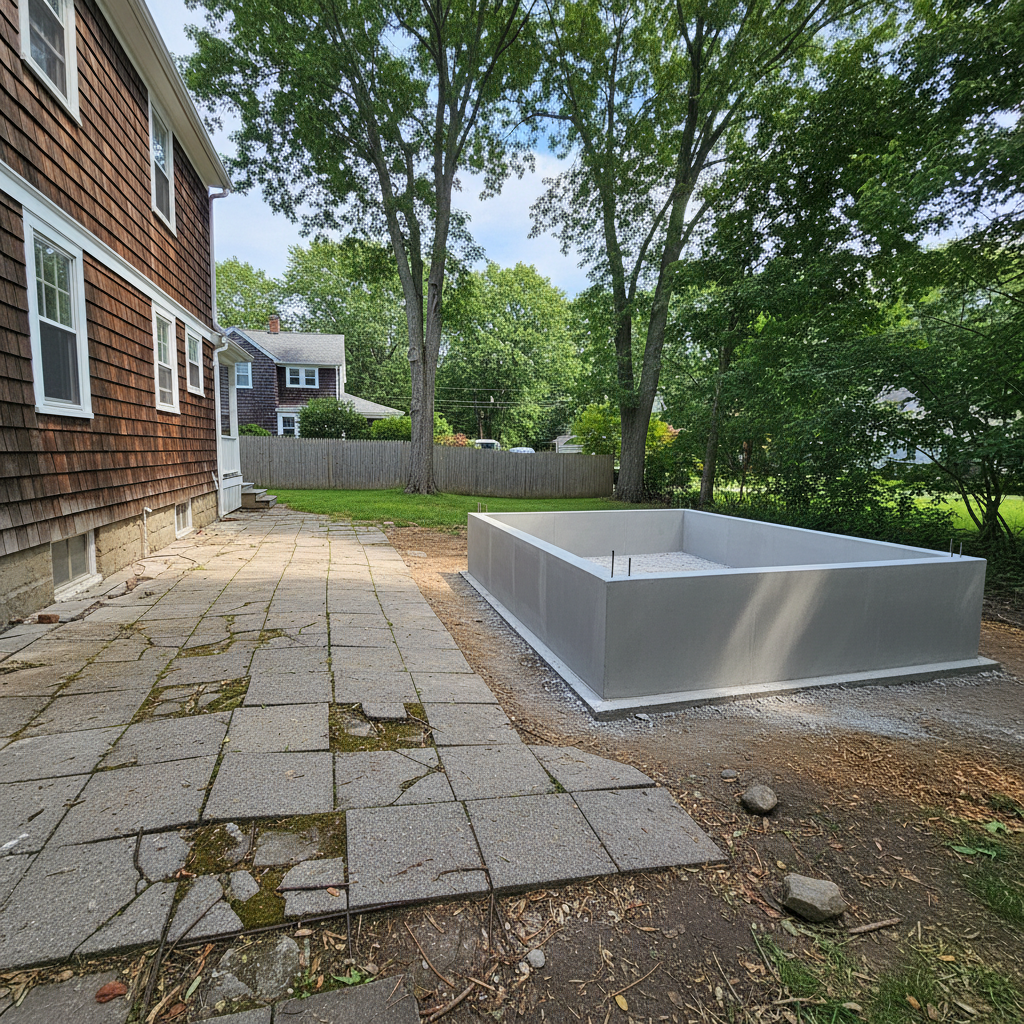
Building a new home or putting on an addition? The foundation is literally what everything else rests on, so you want to get it right. Here in Providence, we've got our share of old homes, new builds, and everything in between. When it comes to concrete foundations, two main approaches usually come up: poured concrete and concrete block. I’ve seen both done well and, frankly, not so well, over my years in this business.
Poured Concrete Foundations: The Solid Choice
Poured concrete foundations are exactly what they sound like. We build forms, usually out of plywood or insulated concrete forms (ICFs), and then pour ready-mix concrete directly into them. Once it cures, you've got a monolithic, seamless wall.
Pros of Poured Concrete:
Strength and Durability: This is where poured concrete really shines. Because it's one continuous piece, it's incredibly strong. You don't have joints that can be weak points. It stands up great to lateral pressure from the soil, which is a big deal around here, especially with our clay soils and the freeze-thaw cycles we get.
Water Resistance: A seamless wall means fewer places for water to get in. While no foundation is 100% waterproof without proper drainage and sealing, poured concrete offers a much better natural barrier against moisture compared to block.
Speed of Installation: Once the forms are up, the concrete can be poured pretty quickly. The curing time is the main factor, but the actual pouring is fast.
Versatility: You can get pretty creative with shapes and designs, although most residential foundations are straightforward.
Cons of Poured Concrete:
Cost: Generally, poured concrete foundations can be a bit more expensive upfront. The forms, the specialized equipment for pouring, and the concrete itself can add up.
Repair Complexity: If a poured foundation ever cracks significantly (which is rare if done right), repairs can be more involved than with block.
Concrete Block Foundations: The Traditional Route
Concrete block foundations, also known as CMU (concrete masonry unit) foundations, are built by stacking hollow concrete blocks together with mortar. It's a method that's been around for a long time, and you see a lot of it in older homes, especially in neighborhoods like the East Side.
Pros of Concrete Block:
Cost-Effective: Often, block foundations can be a more budget-friendly option, especially for smaller projects or if you're looking to save a bit on materials and labor.
Flexibility in Construction: Blocks are easier to handle individually, which can be an advantage on tight job sites or for intricate designs where pouring might be difficult.
Easier Repairs: If a section of a block wall gets damaged, it's often easier to remove and replace individual blocks than to repair a solid poured wall.
Insulation Potential: The hollow cores of CMU blocks can be filled with insulation, which can improve the energy efficiency of your basement or crawl space.
Cons of Concrete Block:
Water Permeability: This is the biggest drawback. Every mortar joint is a potential pathway for water. Without meticulous waterproofing, drainage, and often parging (a thin coat of mortar on the exterior), block foundations are more prone to moisture issues and leaks.
Less Lateral Strength: While strong vertically, block walls aren't as good at resisting lateral pressure from soil as a monolithic poured wall. This is a real consideration with our heavy New England soils.
Labor Intensive: Laying blocks is skilled work and can take more time than setting forms and pouring concrete, depending on the crew.
Appearance: Unless parged or finished, the look of stacked blocks isn't always preferred for exposed foundation walls.
My Recommendation for Providence Homeowners
Look, both options can give you a solid foundation if they're installed correctly by experienced professionals. But if you're asking me, for most residential projects in Providence, I lean towards poured concrete foundations.
Why? Our climate. We get a lot of rain, snow, and those brutal freeze-thaw cycles that can really put stress on a foundation. The superior strength and inherent water resistance of a monolithic poured concrete wall just make it a more robust and reliable choice for the long haul here in Rhode Island. You'll likely have fewer headaches with moisture down the road, and that's a big deal for basement living spaces or just keeping your home dry.
While the upfront cost might be a little higher, the peace of mind and reduced risk of water intrusion often make it a worthwhile investment. We at Precision Concrete Providence have done plenty of both, and we always talk through the pros and cons specific to your site and budget. But if I'm building my own place, I'm going with poured concrete every time.
Ultimately, the best foundation for your home depends on your specific site conditions, budget, and long-term goals. Don't hesitate to get a few opinions and make sure you're working with a contractor who understands the unique challenges of building in our area.