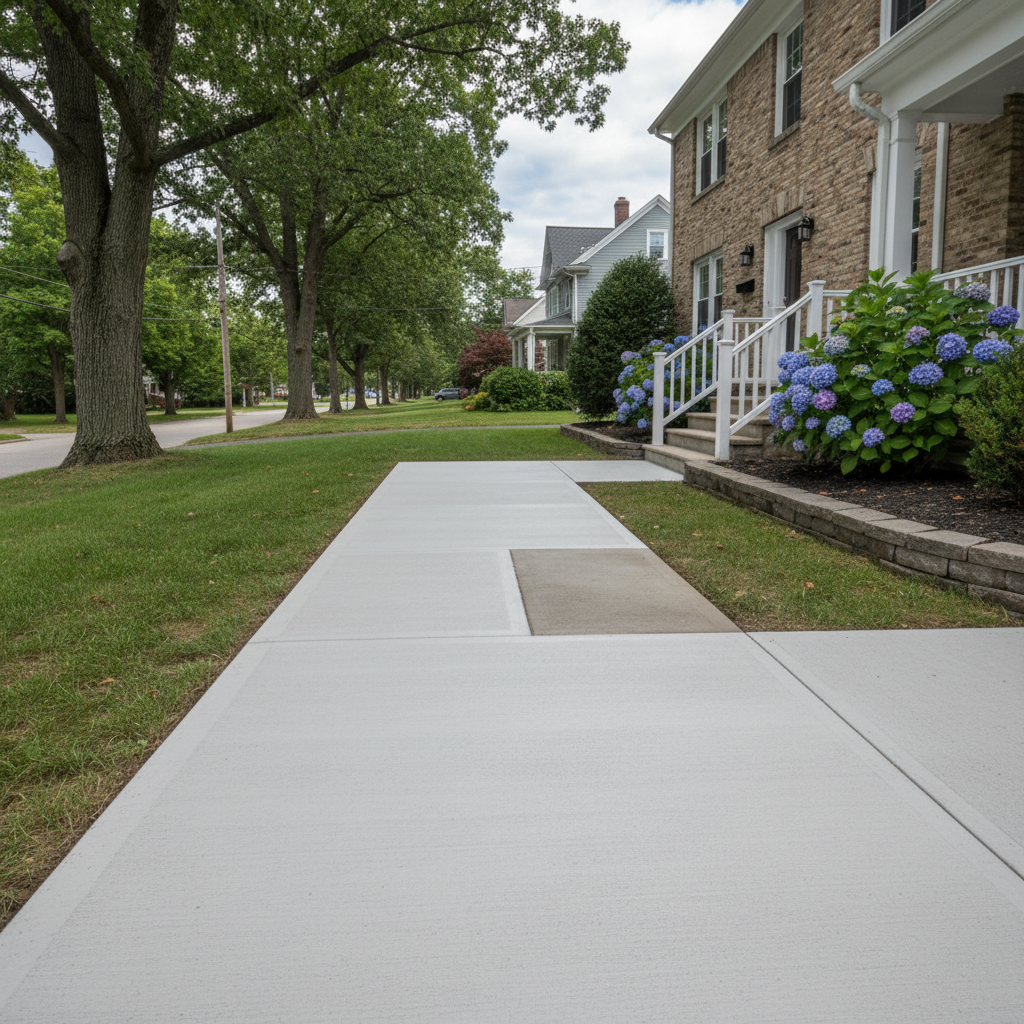
You just had that concrete repaired, and it looks great. You are probably thinking you are all set for another decade or two. Our team knows that you are mostly right. Here in Providence, our New England weather swings are wild. We see icy winters that freeze everything solid as well as humid, hot summers. Your concrete needs a little care to truly go the distance. Precision Concrete Providence has been doing this work long enough to see what works as well as what does not work. This is especially true when it comes to keeping those repairs from needing another repair down the line.
Extend the Life of Your Concrete Repair
First, we will talk about making that fresh repair last. It is not just about the fix itself. It is about protecting the repair from the elements that caused the original problem. For us in Rhode Island, that means battling moisture as well as temperature fluctuations.
- Seal it up: This is probably the most important thing you can do for your concrete repair in Providence. Concrete is porous. This means it soaks up water. When that water freezes, it expands. This puts immense pressure on the concrete and causes cracks or spalling. Spalling is that flaking you sometimes see. A good quality penetrating sealer creates a barrier against moisture as well as chemicals. Our team usually tells folks to reseal every 2-3 years. This depends on how much abuse the concrete takes. The best time to do this in our neck of the woods is late spring through early fall. This means May through September. The weather is consistently above 50°F and dry during this time.
- Mind those joints: Expansion joints are not just for show. They let your concrete expand and contract without cracking. If the filler material in those joints is missing or deteriorated, water and debris can get in there. This can cause big problems for your concrete. You should keep them clean and make sure they are properly sealed with a flexible caulk.
- Drainage is king: Water is concrete's worst enemy. You must make sure water drains away from your concrete surfaces. It should not drain towards them. If you have a patio or driveway, check that it slopes away from your house. Pooling water can lead to erosion as well as weaken the concrete.
Regular Maintenance: What You Need to Do
You can think of it like changing the oil in your car. A little regular attention goes a long way for your concrete. You do not need to be out there every day. However, a few simple tasks will keep things in good shape.
- Clean it regularly: You should sweep off dirt, leaves, and other debris. If you let organic matter sit, it can hold moisture against the concrete. This can lead to staining as well as biological growth like moss. A good power wash once a year can clear away grime. However, you should be careful with the pressure. You do not want to damage the surface or the sealant.
- Address spills immediately: Oil, grease, and de-icing salts can all stain your concrete. They can also degrade your concrete if left to sit. You should clean them up as soon as you can.
- Inspect twice a year: Precision Concrete Providence recommends a good look-over in the spring after the snow melts. You should also inspect it again in the fall before winter sets in. You should check for cracks, gaps in sealant, or any changes in the surface.
Warning Signs of Problems: What to Look For
You do not need a degree in concrete to spot trouble. Your eyes are your best tools. Here is what should make you pause and take a closer look at your concrete in Providence.
- Cracks: Hairline cracks can be normal. This is especially true here with our freeze-thaw cycles. However, if you see cracks that are widening, getting deeper, or running in a spiderweb pattern, that is a red flag. Horizontal cracks, especially in foundations, are usually more serious than vertical ones.
- Spalling, pitting, or flaking: This happens when the surface starts to chip, peel, or form small holes. It is often caused by moisture getting into the concrete and freezing. Sometimes it is caused by de-icing salts. If you see this, your sealer might be failing. It might also mean the sealer was not applied correctly.
- Uneven surfaces or sinking: If a slab starts to sink or you notice unevenness, that is a serious sign. It means the soil underneath is not supporting it properly. This can lead to bigger structural issues.
- Water pooling or discoloration: Puddles that do not drain can indicate water intrusion. Unusual stains as well as white powdery deposits, called efflorescence, can also indicate water intrusion or chemical reactions.
- Gaps: Gaps forming between your concrete and other structures can indicate movement. This includes gaps between your concrete and your house or another slab.
When to Call a Professional
Some things you can handle yourself. A little caulk in an expansion joint is no problem. A good cleaning is also no problem. However, there are times when you really need to bring in the pros. You should not wait until a small issue becomes a giant, expensive headache.
- Significant cracking: If you have wide, deep, or rapidly spreading cracks, you need an expert. This is especially true if they are horizontal. An expert can assess the structural integrity of your concrete.
- Sinking or uneven slabs: This is not just an eyesore. It is a tripping hazard. It can also point to serious foundation or sub-base issues. We have many varied soil conditions around Providence. This includes clay-rich inland areas as well as sandy coastal spots. This can make things shift.
- Persistent water problems: If you are constantly battling pooling water, dampness, or efflorescence, you might have a deeper issue. This could be a drainage or waterproofing problem.
- Exposed rebar or crumbling concrete: If you see the steel reinforcement poking through, that is serious. If large areas of concrete are crumbling more than 3-4 inches deep, that is serious structural deterioration.
- Any changes that concern you: You should trust your gut. If something just does not look right, you should get a professional opinion. If you are worried about the safety or longevity of your concrete, it is always better to get a professional opinion.
At Precision Concrete Providence, we see all kinds of concrete issues. We are happy to come out and take a look. Our team will give you an honest assessment. Catching these problems early can save you a lot of money as well as stress in the long run. You should not let our beautiful but tough Rhode Island climate get the best of your concrete!